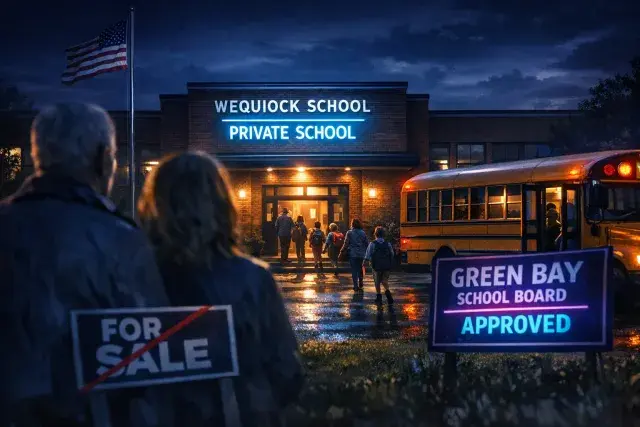
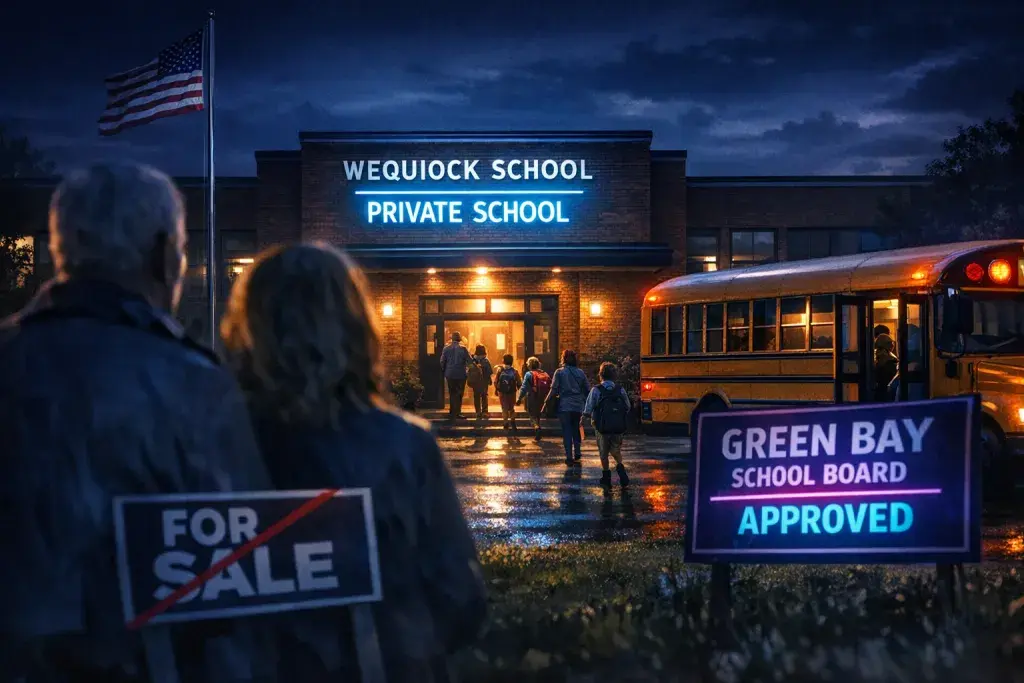
The Green Bay School Board voted narrowly to allow private school students to occupy the former Wequiock Elementary building for the foreseeable future. This decision overrides a key condition from the property's recent sale, raising questions about public oversight of former school assets. Located at 3994 Wequiock Road in the Town of Scott, the building now shifts from public education to private hands after a contentious board debate.
Property Sale Sets Stage for Dispute
In June 2025, David Charles, president and owner of Cash Depot Ltd., purchased the former Wequiock Elementary for $500,000. The sale agreement explicitly prohibited using the property as a school, reflecting the district's intent to repurpose surplus facilities amid declining enrollment. Such sales often fund district operations or debt reduction, but covenants like this one aim to prevent direct competition with remaining public schools.
Board Vote Challenges Original Restrictions
The close vote by the Green Bay School Board effectively nullifies the no-school clause, permitting private education within the building. Board members weighed community needs against contractual obligations, with supporters arguing for flexible use of underutilized space. This outcome highlights tensions in local governance, where boards balance fiscal prudence with broader access to educational facilities.
Implications for Education and Local Policy
Private schools gain a ready-made facility, potentially easing expansion in the region without new construction costs. For the public district, the decision preserves some indirect revenue stream while avoiding maintenance burdens. Yet it underscores evolving trends in education policy, where closed public buildings increasingly serve alternative providers amid debates over privatization and resource allocation. Future precedents may influence how districts handle similar properties, prioritizing adaptability over rigid restrictions.