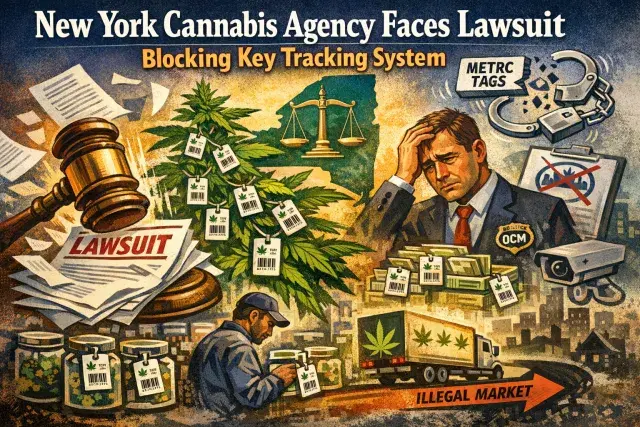
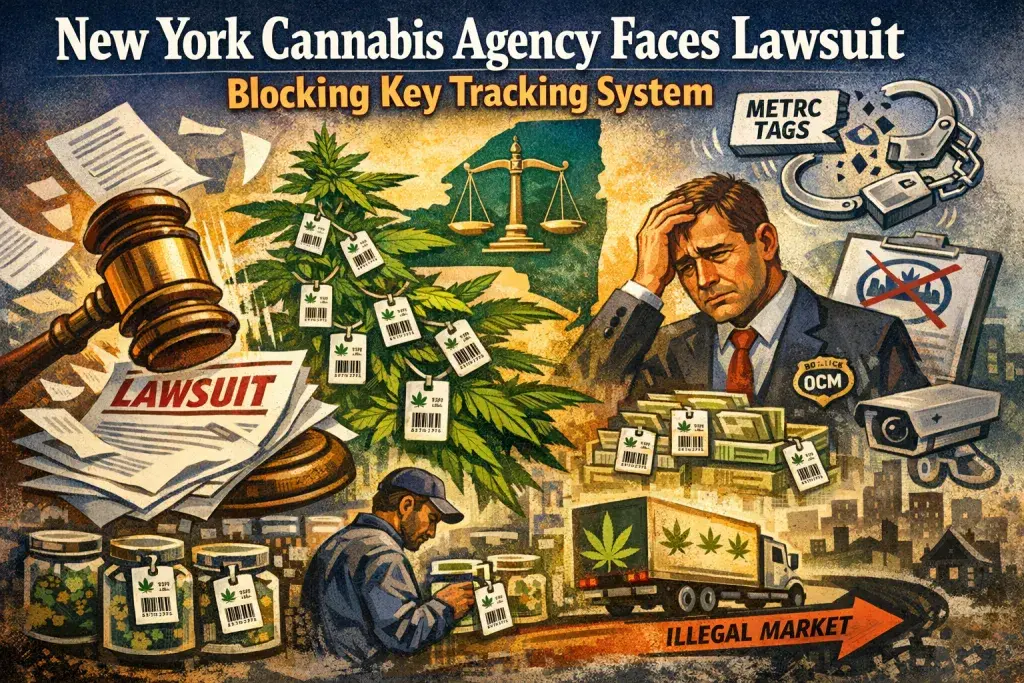
A licensed cannabis processor in New York has sued the state to halt implementation of a mandatory seed-to-sale tracking system set for January 12. Veterans Holdings Inc., operating as Veterans Choice Creations, claims the requirement to buy ID tags from Metrc imposes an unfair economic burden and exceeds the Office of Cannabis Management's authority. The dispute arrives amid recent enforcement setbacks for the agency, including a dropped investigation into an alleged license rental scheme.
Lawsuit Challenges Metrc Tags and Regulatory Overreach
Veterans Holdings filed its 19-page complaint on December 16 in Albany Supreme Court, seeking a temporary restraining order against the tracking mandate. The suit names the Office of Cannabis Management (OCM), interim Executive Director Susan Filburn, the Cannabis Control Board, the Division of Alcoholic Beverage Control, and Metrc. Plaintiffs argue that OCM lacks statutory power to require operators to purchase tags at 10 cents each from Metrc, violating separation of powers.
The complaint highlights a shift from the prior BioTrack system, which tagged batches or lots, to Metrc's demand for unique identifiers on individual items. This change multiplies tag needs by hundreds or thousands for licensees. Indoor operations, limited to 10,000 square feet of canopy with one to two plants per square foot, could require up to $2,000 in tags per crop. Outdoor sites, allowed up to 100,000 square feet, face costs as high as $20,000.
OCM responded on December 18 with an affirmation from Regulatory Operations Director Patrick McKeage, warning that a restraining order would undermine product authenticity and consumer safety. The state must file its full response by January 7. To address costs, OCM announced on December 15 it would distribute 20 million free tags evenly to licensed processors.
Enforcement Stumbles Precede Tracking Switch
New York's adult-use cannabis market launched on December 29, 2022, with BioTrack initially selected for seed-to-sale tracking to prevent diversion to illicit channels. Deadlines slipped amid retail rollout delays, originally targeting 2023 implementation. In early August, BioTrack partnered with Metrc, prompting OCM to switch providers and set the January 12, 2026, compliance date.
Enforcement woes intensified in December. On December 8, Governor Kathy Hochul ordered the resignation of interim Executive Director Felicia Reid and Deputy Counsel James Rogers, who led the Trade Practices Bureau. That day, OCM dropped its largest recall to date and an investigation into Omnium Health, accused of renting facilities to unlicensed operators for legal and illicit products. Investigators had reviewed audits, contracts, and witness testimony, but OCM offered no explanation for the withdrawal.
Hochul stated the agency had obstructed market growth, particularly through the withdrawn compliance action. Filburn, now interim director, affirmed OCM's commitment to public health during her first Cannabis Control Board meeting on December 18, prioritizing stability and clarity.
Implications for Market Integrity and Illicit Diversion
A functional seed-to-sale system aims to trace cannabis from cultivation to sale, exposing schemes like facility rentals that fuel black markets. Delays exacerbate OCM's challenges in a state where illicit sales persist despite legal efforts. The lawsuit threatens this tool just as prior enforcement failures highlight gaps in oversight.
Success hinges on court outcomes and OCM's response. Free tags mitigate some costs, but broader questions remain about regulatory authority and transition fairness. Resolution will shape New York's ability to build a compliant market, protect consumers, and curb diversion that undermines legal operators.