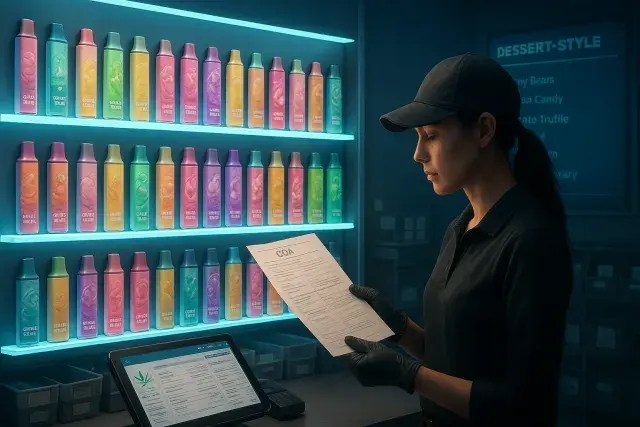
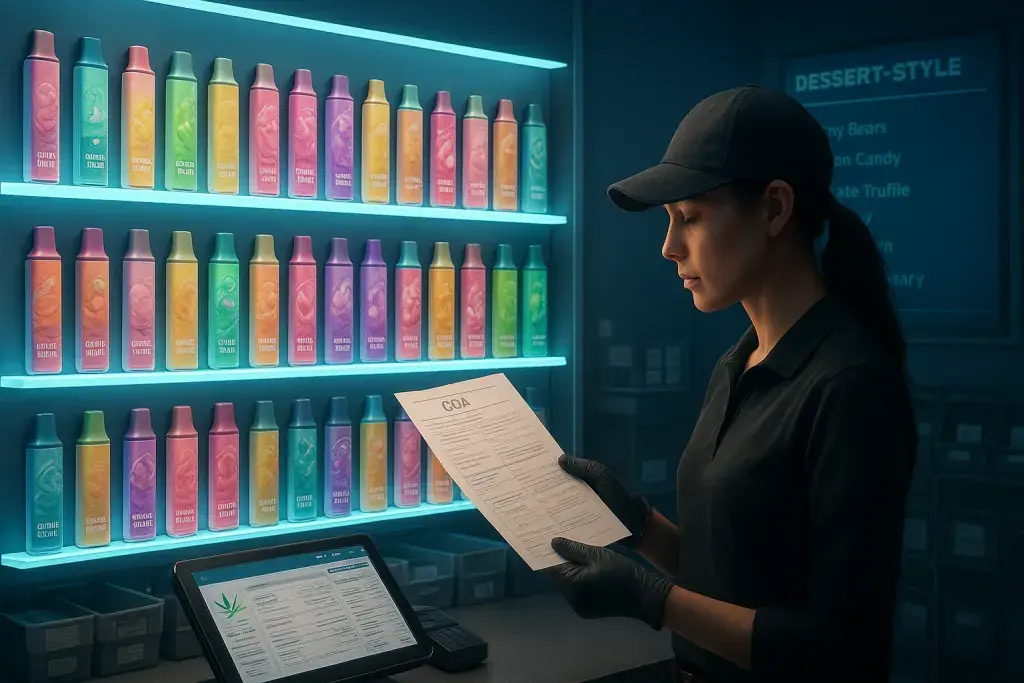
Candy-inspired and dessert-style flavor profiles have moved from novelty to mainstream positioning in the disposable vape segment, reshaping how brands approach product development and how licensed retailers stock and merchandise their budroom inventory. What started as a fringe experiment in layered sweetness has become a recognized category direction - one that carries real implications for dispensary buyers, wholesale purchasers, and the operators making SKU decisions on the floor.
The mechanics of this shift aren't hard to trace. Consumers drawn to expressive, multi-note flavor constructions are responding to something sensory and, in many cases, nostalgic - gummy-inspired profiles, cooling fruit finishes, confectionery-style sweetness that feels familiar without being simple. Retailers building out their product menus increasingly have to weigh these preferences against practical considerations: shelf rotation, inventory turnover, and the compliance requirements attached to every unit moving through a licensed facility. In states with stricter advertising rules around flavor marketing, operators are also navigating how they describe and display these products in-store. Those running point-of-sale infrastructure in tightly regulated markets - including those relying on cannabis pos systems alaska - understand that flavor variety at the product level translates directly into catalog management complexity on the back end.
Here's the catch: a wider flavor catalog sounds straightforward in theory, but it compounds SKU management demands at the store level. Every additional profile variation requires its own batch tracking, compliant labeling, and seed-to-sale logging. For multi-location operators or dispensaries running lean compliance teams, that overhead adds up. Wholesale menus from brands leaning into this direction - dessert builds, candy-style blends, layered fruity-sweet combinations - can look attractive on paper while quietly creating friction in inventory systems not built for high SKU volume.
What Flavor Innovation Actually Demands from Licensed Retailers
The consumer appetite for more creative disposable profiles doesn't change the regulatory scaffolding retailers operate inside. Products still require certificates of analysis, compliant packaging, and accurate potency representation at the point of sale. In several state markets, flavor-forward products - particularly those with confectionery or candy-adjacent branding - have drawn additional regulatory attention around packaging that could appeal to minors. That's not an abstract concern. State regulators have moved against products and retailers for packaging and labeling that crosses those lines, and the burden falls on the licensed operator, not just the brand.
For dispensary owners, the practical question isn't whether sweet profiles are popular - they clearly are - but whether the brands behind them are delivering products that arrive with full documentation, accurate COAs, and packaging that clears compliance review at intake. A product that moves quickly off the shelf but triggers a compliance issue on inspection creates a liability that no velocity metric justifies. Flavor trends drive consumer interest. Compliance infrastructure determines whether a retailer can actually carry those products without risk.
The Broader Signal for B2B Buyers and Brand Partners
For wholesale buyers and category managers, the movement toward dessert and candy profiles reflects something worth watching: flavor architecture - the deliberate layering of sweetness, fruit, and cooling or chewy notes - has become a real differentiator in a crowded disposable segment. Brands investing in that formulation depth are signaling product development maturity, not just novelty. That matters when operators are evaluating which wholesale relationships to build for the long term.
What's striking here is how closely this mirrors flavor strategy in other regulated consumer categories - craft beverages, confectionery, and even functional edibles - where layered sensory design commands shelf position and repeat purchase over single-note commodity products. Cannabis retail isn't immune to those dynamics. Dispensary operators who treat flavor category decisions as pure trend-chasing miss the underlying point: consumers are expressing durable preferences for complexity and familiarity, and product menus that reflect that - compliantly, with full documentation - tend to outperform those that don't.
The operational discipline required to support that kind of inventory is real. But so is the market signal.