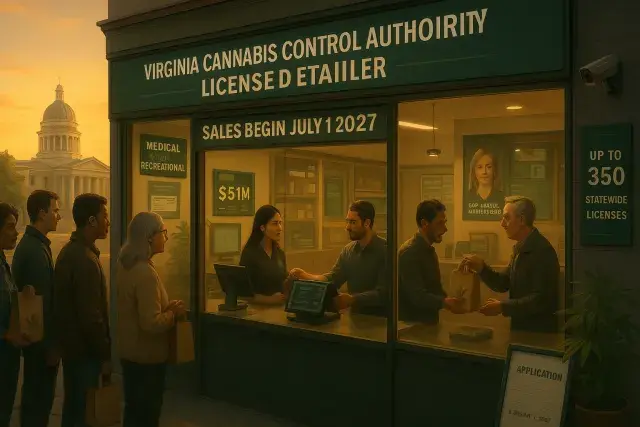
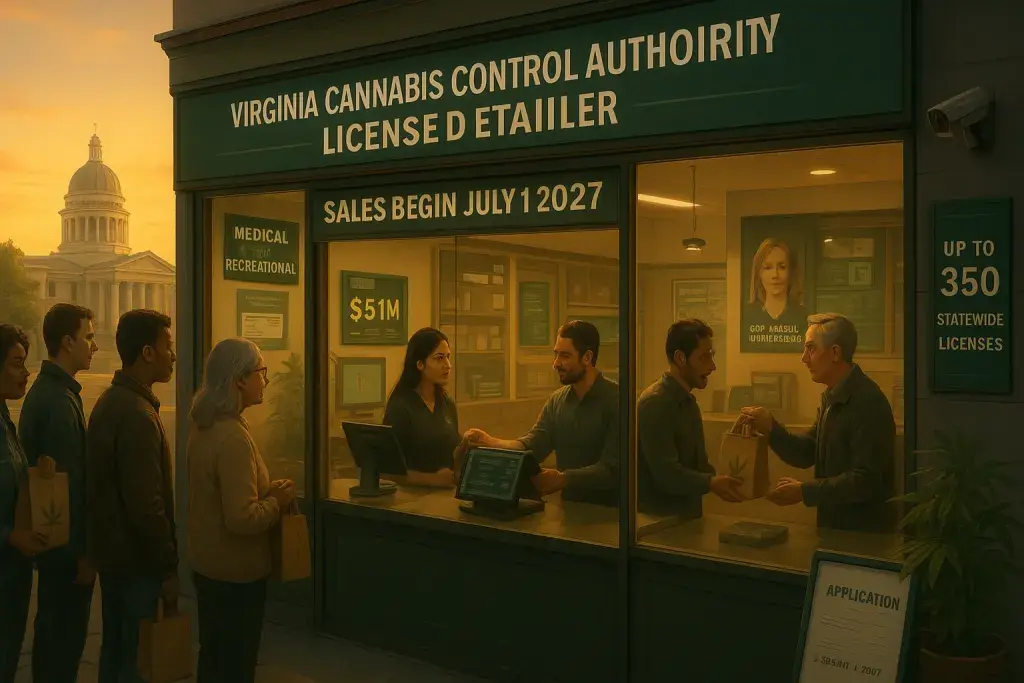
Virginia has finally done what it could not do for years: create a legal retail market for recreational marijuana. The General Assembly gave final approval to the measure on June 29, 2026, after accepting Gov. Abigail Spanberger's budget amendments - and licensed retail sales are now set to begin July 1, 2027. For dispensary operators, investors, compliance vendors, and ancillary businesses watching from the sidelines, the clock just started.
The gap between legalization and retail has been an expensive lesson in political friction. Virginia decriminalized adult possession back in 2021, yet a workable retail framework never materialized - former Gov. Glenn Youngkin vetoed retail sales legislation in 2024, leaving the state in an awkward middle position where adults could legally possess marijuana but had no licensed store to buy it from. That kind of regulatory limbo is familiar territory in this industry; states like Maine went through their own multi-year delay between voter approval and the first retail sale, and operators there leaned heavily on point-of-sale infrastructure - tools like IndicaOnline POS Maine - to manage the compliance requirements once the market finally opened. Virginia operators should be taking notes on how those early-mover states handled the operational ramp-up, because the timeline here is tighter than it looks.
The Virginia Cannabis Control Authority will open retail license applications on February 1, 2027 - just five months before the first legal sale date. State law authorizes up to 350 retail cannabis licenses statewide. That cap isn't small, but it's not open-ended either, and the application window before launch day is narrow enough that operators who haven't started their real estate searches, compliance documentation, and capital planning are already running behind. Seed-to-sale tracking enrollment, POS system selection, compliant packaging sourcing, and staff training all need to be in place before a single transaction can legally occur. Five months is a compressed runway for any of that.
Tax Structure and Revenue Expectations Operators Need to Understand Now
Recreational sales in Virginia will carry both state sales taxes and a cannabis excise tax. Legislative budget estimates project roughly $51 million in state revenue during the first year of adult-use retail. That number is useful context - it signals the state has modeled a meaningful but not explosive launch - though operators should treat their own revenue projections with caution until wholesale pricing, license distribution, and competitive density become clearer.
The excise tax layer matters operationally. Cannabis retailers nationally have had to build tax calculation directly into their POS workflows because rounding errors, category misclassification, or system misconfiguration can produce compliance exposure at audit. Virginia operators will need to confirm that whatever point-of-sale system they select correctly applies both the excise and sales tax layers at the transaction level - not something to sort out after opening day. And federal 280E tax treatment continues to apply for cannabis businesses federally, meaning standard business expense deductions remain restricted at the federal level regardless of what Virginia law permits. That financial structure shapes margins in ways that differ sharply from conventional retail.
Possession Limits, Home Cultivation, and the Medical Market Running in Parallel
The new law increases the legal possession limit from one ounce to two ounces for adults 21 and older. Home cultivation of a limited number of plants under existing Virginia law also continues. Neither of these changes is operationally complex for retailers, but both matter for consumer expectations on the floor - budtenders should understand what customers can legally carry out and what questions about home grows they may reasonably field.
Virginia's medical cannabis program continues to operate separately through licensed dispensaries. That parallel structure - common in states that added adult-use after establishing a medical program - creates a familiar tension around wholesale supply, pricing tiers, and patient loyalty. Medical operators who transition into or alongside the adult-use market will need to manage dual compliance tracks, separate inventory designations, and potentially different testing or labeling requirements depending on how the CCA structures its final rules. The thing is, dual-market operators who underestimate the administrative weight of running medical and adult-use simultaneously have paid for that assumption in compliance violations and operational drag.
What Regional Operators and Ancillary Businesses Should Be Watching
Whether retail stores open in specific localities - including areas like Southside Virginia - will depend on the licensing process and local business interest. Virginia has not mandated that every jurisdiction host a cannabis retailer, which means zoning decisions, local political appetite, and real estate availability will all shape where the 350 authorized licenses actually land. Landlords in viable commercial corridors and commercial real estate brokers serving those markets should be aware that cannabis tenancy carries specific buildout requirements, ventilation considerations, security infrastructure mandates, and often more restrictive signage rules than standard retail.
For payment processors, software vendors, and compliance technology providers, Virginia's 2027 launch represents a defined entry point - not an immediate opportunity. The application window opens February 1, 2027. That means the serious procurement conversations between operators and their technology stack will accelerate in the second half of 2026. POS vendors, seed-to-sale tracking integrators, and compliance consultants who want to be positioned for Virginia business should be building those relationships now, not in January. The market is authorized. The timeline is set. The operational preparation is the variable that separates a clean launch from a chaotic one.