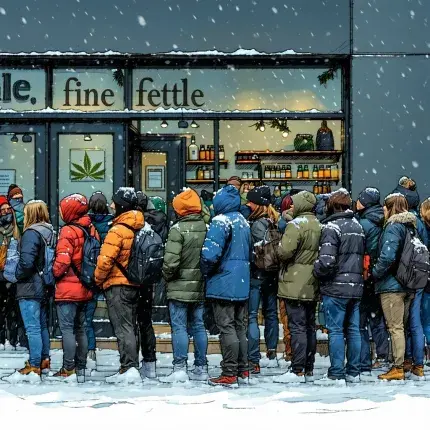

Workers at the Sunnyside dispensary in Wyomissing, Pennsylvania - a retail location operated by Cresco Labs, one of the larger publicly traded multistate operators in the cannabis sector - voted unanimously to authorize a strike after contract negotiations stalled over wages and working conditions. The vote, carried out through Teamsters Local 429, signals that organized labor is pressing harder on cannabis employers at a moment when the industry is still sorting out what worker compensation actually looks like in a regulated, vertically integrated environment.
What's Actually Being Contested
The core dispute is straightforward: workers say Cresco Labs has not offered a contract that reflects the economic realities of doing the job. Cobi Motley, a wellness adviser at the Wyomissing location and a Local 429 member, put it plainly - the current proposal creates "economic instability," and without a livable wage, long-term careers in cannabis retail become difficult to sustain. That framing matters. Wellness advisers and budtenders are customer-facing employees who manage product knowledge, compliance-adjacent conversations with consumers, and POS transactions - often under strict regulatory and operational protocols. Turnover in those roles is expensive for operators, not just inconvenient.
Teamsters Local 429 President Bill Shappell described the membership as "united and ready to do whatever it takes to secure a strong contract." Jesse Case, director of the Teamsters Food Processing Division, made the broader argument: cannabis should function like other established industries where workers can build careers spanning decades, not rotate through entry-level positions indefinitely.
Labor Pressure Is Building Across Pennsylvania Cannabis Retail
This isn't an isolated incident. In November, Pennsylvania Teamsters completed what the union described as the longest-running successful cannabis strike in U.S. history - a data point worth sitting with, given how young the regulated cannabis industry is. The fact that the record exists at all tells you something about where labor relations in this sector currently stand.
For multistate operators running vertically integrated businesses - cultivation, processing, and retail under one corporate structure - labor costs are a significant line item across every tier. Dispensary retail, in particular, operates under a specific set of pressures that make wage disputes harder to quietly resolve. State-licensed retail locations are subject to regulatory oversight that touches staffing ratios, training requirements, and consumer interaction standards. When a work stoppage affects a licensed dispensary, it doesn't just reduce sales; it can affect a company's operational standing with state regulators if compliance-sensitive functions are disrupted.
There's also a reputational dimension for publicly traded operators. Cresco Labs is listed on a public exchange, which means labor disputes, strike authorizations, and work stoppages enter the record - visible to institutional investors, ESG-focused analysts, and potential retail partners who increasingly evaluate labor practices alongside financial performance.
What Operators Should Take From This
The Wyomissing situation reflects a structural tension that cannabis employers across multiple states are managing right now. The industry built its early retail workforce on the assumption - reasonable at the time - that working in a licensed dispensary carried its own appeal, enough to offset wages that didn't always compete with comparable retail positions elsewhere. That assumption is wearing thin.
Here's the catch: cannabis retail margins are already compressed by state excise taxes, municipal fees, and in some jurisdictions, the lingering federal tax burden under 280E, which disallows standard business deductions for plant-touching companies. Operators don't have unlimited room to raise labor costs. But the counterargument from the Teamsters is equally grounded - workers who can't build financial stability won't stay, and constant recruitment and retraining costs are their own drag on operations.
For dispensary owners and multistate operators watching this, the labor organizing trend in cannabis retail is no longer a peripheral story. Unions have demonstrated in Pennsylvania that they can win, sustain a work stoppage, and use that leverage to set precedents. The Teamsters are explicitly framing cannabis as a long-term career sector, not a transient gig economy. How operators respond to that framing - at the bargaining table, in their HR structures, and in how they communicate with employees about compensation and advancement - will shape their ability to staff compliant, stable retail locations as the market matures.