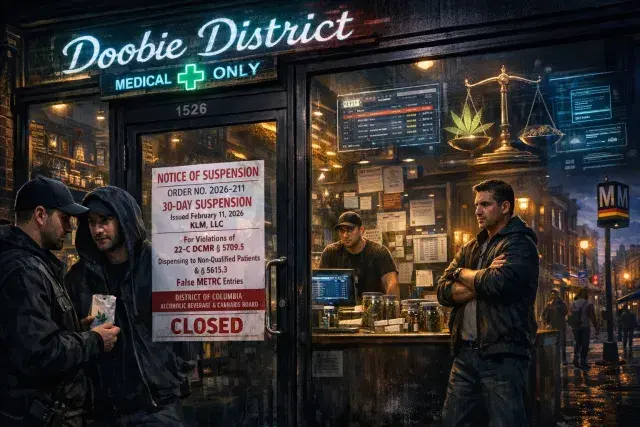
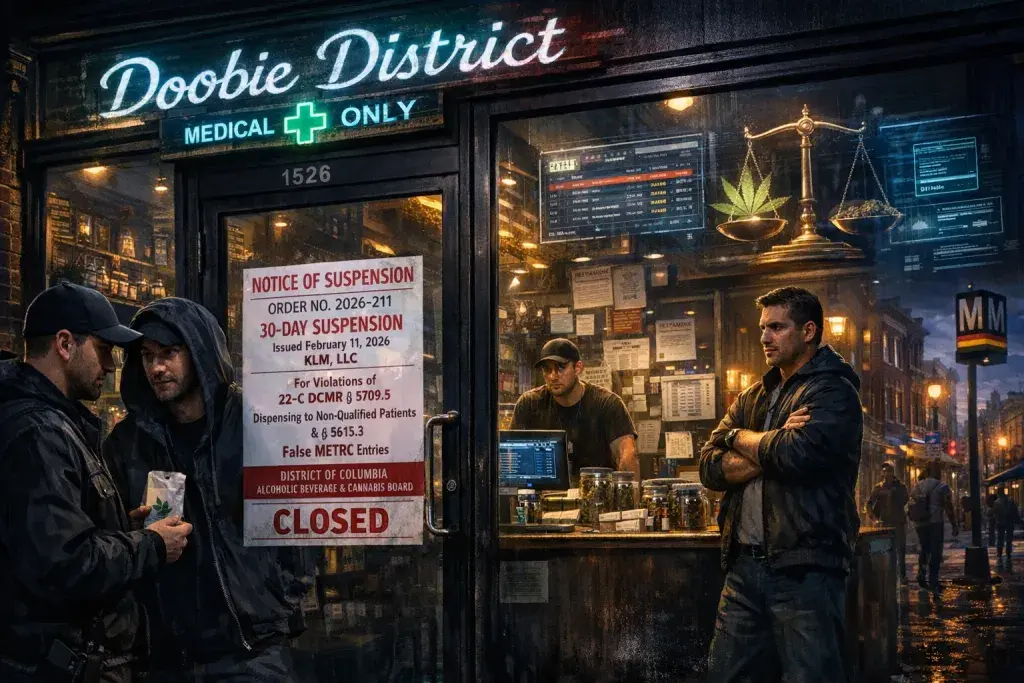
The District of Columbia Alcoholic Beverage and Cannabis Board has ordered a 30-day suspension for KLM, LLC, operating as Doobie District on U Street, after uncovering sales of medical cannabis to unqualified individuals and falsified entries in the state's METRC tracking system. Issued February 11, 2026, this ruling underscores the critical need for strict compliance in D.C.'s medical cannabis program to protect patient access and prevent diversion.
Undercover Probe Reveals Verification Failures
An investigation launched May 9, 2025, by the Alcoholic Beverage and Cannabis Administration (ABCA) followed tips about unauthorized medical cannabis sales at 1526 U Street, NW. Undercover agents made two controlled purchases, confirming staff dispensed medical product without checking IDs or patient registration cards.
- Product labels bore a Doobie District employee's name and ID, not the buyers'.
- The employee's METRC account showed purchases exceeding the 8-ounce, 30-day patient limit.
- Two other accounts linked to the same credentials revealed similar overselling.
Board Upholds Key Regulatory Violations
In Order No. 2026-211, the Board sustained charges under D.C. rules: dispensing to non-qualified patients or caregivers (22-C DCMR § 5709.5) and entering false METRC data (22-C DCMR § 5615.3). METRC, D.C.'s seed-to-sale system, ensures traceability from cultivation to sale, vital for preventing black market diversion in a market where medical cannabis demand outpaces recreational options.
Doobie District stipulated to the facts but argued for leniency, citing staff terminations, retraining, and new oversight like weekly sales tracking by owner Peter Murillo.
Implications for Cannabis Retail and Patient Safety
While revocation was considered, the Board opted for suspension plus mandatory ABCA-approved training within 60 days, emphasizing licensee responsibility for supervision. This case highlights broader challenges in D.C.'s cannabis sector: rapid growth strains verification processes, risking unqualified access that could undermine public health safeguards and fuel illicit trade.
With medical cannabis serving patients needing verified relief for conditions like chronic pain or epilepsy, such lapses erode trust. Stricter enforcement may push retailers toward automated verification tech, aligning D.C. with states like Colorado, where robust tracking cut diversion by over 50% post-implementation. Ultimately, this suspension signals zero tolerance, fostering a safer, compliant ecosystem.