Cannabis retail carries a liability profile most commercial tenants never deal with: cash-heavy transactions, federally restricted banking, high-value inventory, and strict chain-of-custody expectations from state regulators. For the landlords and property managers who lease to dispensaries, cultivation facilities, and processing operations, a single break-in or unverified access incident can trigger a six-figure loss - through stolen product, damaged build-outs, insurance disputes, or a compliance violation that puts a tenant's license at risk.
Why Cannabis Properties Carry Elevated Exposure
Dispensaries operate under seed-to-sale tracking requirements, and most states tie license renewal to demonstrable security controls - video retention, access logs, alarm monitoring. A property owner leasing to a licensed operator inherits part of that exposure. If access control can't produce a reliable log of who entered a storage room overnight, that's not just a security gap - it's a compliance gap that can show up in a regulator's inspection or an insurer's claim review. Legacy keypads and fobs weren't built for this. They tell you a code was entered, not who used it, and they can't flag a tailgating entry or a door propped open after hours.
Where Reactive Systems Fall Short
Most CCTV installed in multi-tenant commercial buildings only records. Nobody's watching the feed in real time, which means footage becomes useful after a loss has already occurred - helpful for an insurance claim, not much use for preventing the claim in the first place. The same goes for siloed alarm panels that trip a notification but don't connect to the camera system or the access control platform. In practice, those disconnected systems create blind spots exactly where multi-tenant properties are most exposed: shared loading docks, stockrooms, after-hours deliveries, and common-area entries serving several tenants with different risk profiles.
AI-based detection changes that equation by distinguishing a person from a shadow or a stray cat, and by escalating that detection to a live monitoring team rather than a stored video file nobody reviews until Monday. Live remote monitoring means a human can verify an incident and intervene - contacting on-site staff, local authorities, or the tenant directly - while something is actually happening, not after the damage is logged.
What a Proper Risk Assessment Looks Like
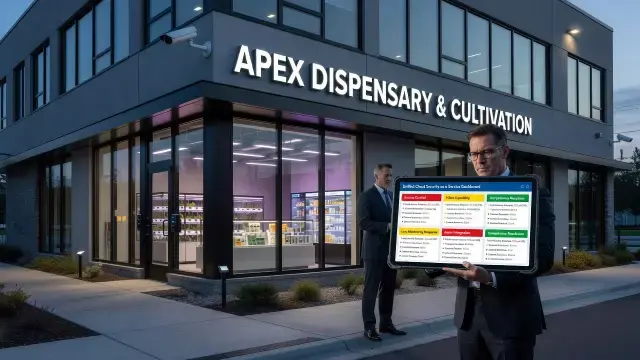
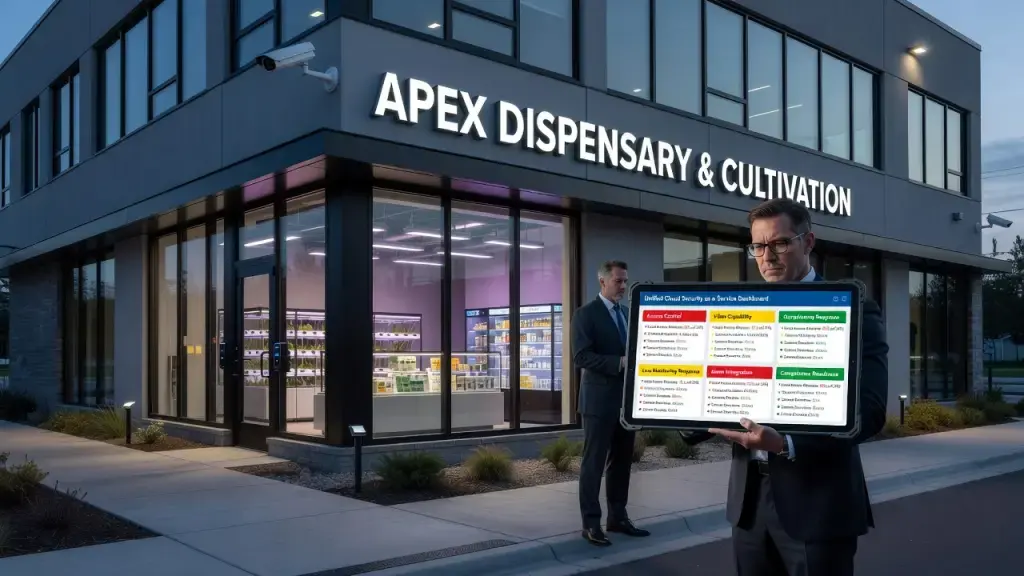
- Access control coverage - can the system produce a verifiable log of every entry and exit, tenant by tenant?
- Video capability - does the system detect and classify activity, or simply record footage no one watches?
- Monitoring response - is there a live team capable of intervening during an incident, not just reviewing it later?
- Alarm integration - do alarms, cameras, and access points share one dashboard, or operate as separate vendor relationships?
- Compliance readiness - can findings be documented in a written report suitable for insurers, lenders, or regulators?
A scored assessment across these categories gives property owners something they rarely have: a red/yellow/green picture of where the building actually stands, rather than a vague sense that "we have cameras." That distinction matters when a tenant's license, an insurance premium, or a lease renewal depends on documented security performance.
The Shift Toward Managed Security Services
The broader trend in commercial and multi-family security is moving away from hardware-and-walk-away installation toward Cloud Security as a Service - a model where access control, video, intercoms, and monitoring stay unified and remotely managed under one contract instead of three separate vendor relationships. For properties leasing to cannabis operators, that consolidation isn't a convenience; it's closer to a necessity, given how much compliance documentation and incident verification those tenants require. Month-to-month service agreements, rather than long hardware lock-ins, also give property owners room to adjust coverage as tenant mix or regulatory expectations change - which, in cannabis retail, they tend to do often.