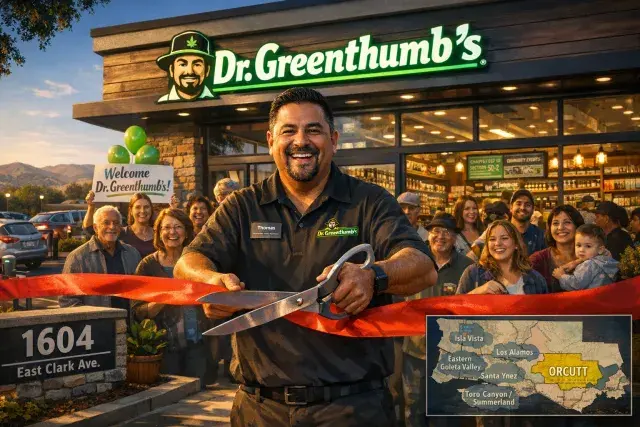
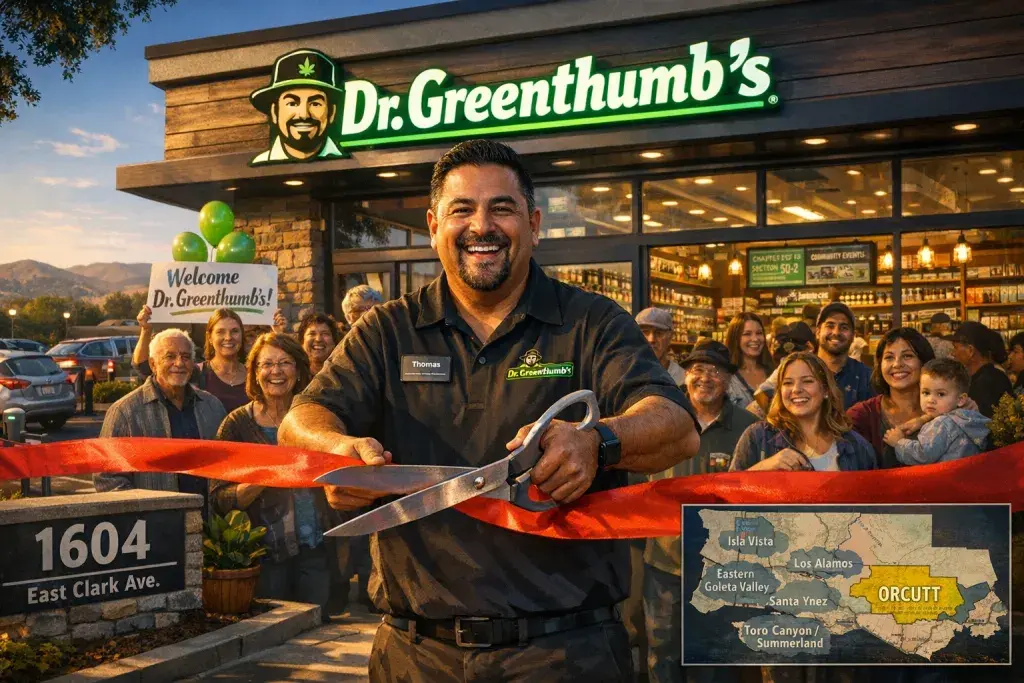
Dr. Greenthumb’s cannabis dispensary swung open its doors at 1604 East Clark Ave. in Orcutt on December 7, becoming the third of six county-approved storefronts in unincorporated Santa Barbara County to launch. This milestone enhances local access to regulated cannabis products while underscoring a deliberate process prioritizing neighborhood harmony and public health.
Rigorous County Process Shapes Dispensary Landscape
Santa Barbara County caps retail cannabis operations at six across specific unincorporated areas—Eastern Goleta Valley, Isla Vista, Los Alamos, Orcutt, Santa Ynez, and Toro Canyon/Summerland—to prevent overconcentration. Currently, Isla Vista, Orcutt, and Santa Ynez sites operate, with others advancing through permitting.
The approval hinges on Chapter 50, Section 50-7 of county regulations, featuring a criteria-based application demanding at least 85% scores. Weighting favors neighborhood compatibility at 90%, informed by prior public meetings in each community plan area. Dr. Greenthumb’s topped Orcutt rankings, securing land use permits, business licenses, and state DCC licensure.
- Key required plans: customer education, community involvement, odor control, parking, and neighborhood design compatibility
- Pre-application community input shaped priorities for proposals
- Second Santa Maria Valley storefront after Root One in Guadalupe
Community-Focused Model Addresses Skepticism and Needs
General manager Thomas Casarez highlights Dr. Greenthumb’s "grocery store model," offering diverse products like sleep aids and pain relief with staff guidance. Emphasizing third-party testing for contaminants and pesticides, the dispensary reassures visitors on safety—inviting skeptics to tour without purchase pressure.
Positive local feedback, especially from Santa Maria residents, stems from its proximity. The store supports nearby businesses and events, fostering integration amid shifting cultural views on cannabis as a wellness tool rather than a taboo substance.
Implications for Regulated Access and Public Health Trends
This rollout reflects broader U.S. trends toward regulated cannabis, reducing black-market risks while promoting education to mitigate misuse. In regions like Santa Barbara, such dispensaries enable precise dosing for medical needs—chronic pain, insomnia—backed by lab-tested purity, contrasting unregulated alternatives.
Future openings in remaining areas could normalize access, potentially lowering impaired driving via controlled sales and boosting local economies. Yet, sustained community plans remain vital to balance growth with livability, signaling mature policy evolution in cannabis normalization.