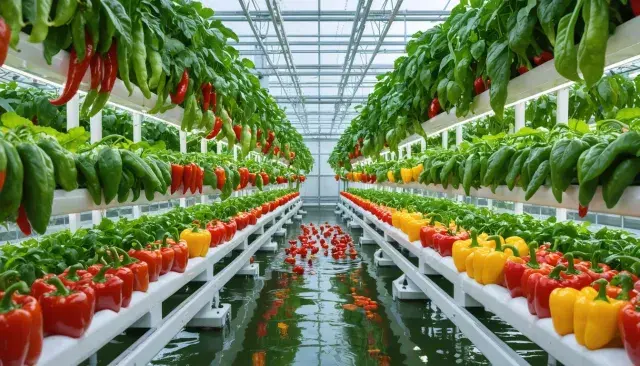
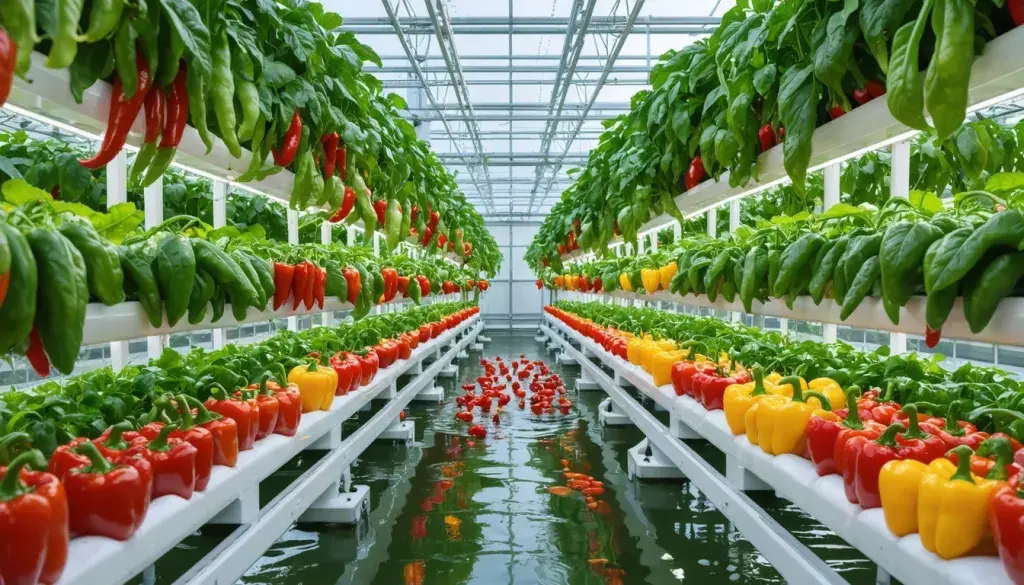
In Ontario, Canada, Fresh Venture Farms has achieved an average 16% production increase over four years as a leading bell pepper propagator, crediting innovative water treatment for healthier crops and major cost savings in sustainable greenhouse farming.
Innovative Techniques Transform Irrigation
Fresh Venture Farms partnered with Ultramins over four years ago, deploying cavitating ultrasonic USAF™ DT-100 transmitters in their water pond, silos, and daily supply lines. Last year, they added nanobubble technology alongside regular 35% hydrogen peroxide dosing, eliminating other disinfectants.
- Started with one transmitter in the pond; expanded to two for silos and five for daily supply.
- H₂O₂ use dropped over 50%, saving $0.10–$0.15 per m² annually.
- 100% water recycling now possible due to reliable pathogen control.
Root Health and Yield Breakthroughs
Florian Locher, key grower at the farm, reports root quality improvements visible in photos from early cultivation to harvest, maintaining vigor throughout the season. DNA sequencing from A&L Laboratories confirmed elimination of Fusarium and Pythium pathogens, common threats in recirculating systems.
Production targets 35+ kg per m² by 2025, up from prior levels, as water quality enhancements optimize nutrient uptake and reduce stress in hydroponic bell peppers.
Cost Reductions and Rapid ROI
Synthetic agents phased out entirely, slashing costs 40–50% per m². Return on investment for USAF™ transmitters hit under six months—far quicker than typical agrotech upgrades.
- No pathogen issues despite full water recycling.
- Streamlined irrigation frees growers from constant monitoring.
- Locher calls it a "no-brainer" for peers, easing operations amid rising input costs.
Broader Implications for Sustainable Ag
This success underscores a shift in greenhouse horticulture toward non-chemical water purification, vital as water scarcity and regulations tighten. Ultrasonic cavitation and nanobubbles disrupt pathogen biofilms effectively, mimicking natural processes while cutting chemical reliance—key for resilient farming amid climate pressures. Farms worldwide could replicate these gains, boosting food security with cleaner, efficient systems.