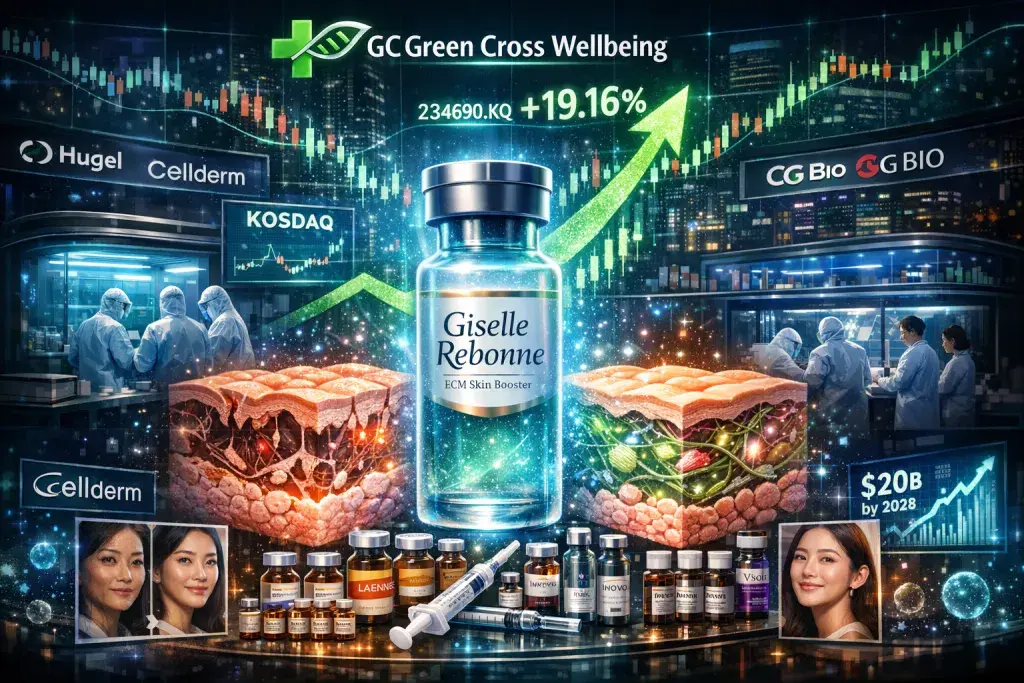
On July 25, GC Green Cross Wellbeing (234690.KQ) saw its stock price rocket 19.16% to 14,680 won, driven by the announcement of its new human tissue-based extracellular matrix (ECM) skin booster, Giselle Rebonne. This move signals a pivotal advance in regenerative aesthetics, tapping into surging demand for advanced anti-aging treatments that promise structural skin restoration over mere superficial fixes.
Giselle Rebonne: A Next-Generation Regenerative Booster
Unlike traditional skin boosters that indirectly spur collagen production through stimulants, Giselle Rebonne delivers human acellular dermal matrix (hADM)—a purified ECM scaffold derived from human tissue. This directly supplies the skin's foundational architecture, enabling true tissue remodeling and regeneration. Experts hail it as a leap forward in aesthetic medicine, where restoring the extracellular matrix addresses aging at its core: the breakdown of skin's supportive framework.
- Processed by MS Bio's proprietary decellularization to eliminate cells and immune triggers
- Supplied via GC Green Cross Wellbeing's tissue bank at its Eumseong facility
- Minimizes risks of rejection, inflammation, and foreign body reactions for superior biocompatibility
Building a Comprehensive Aesthetics Empire
The launch bolsters GC Green Cross Wellbeing's portfolio, now spanning placenta-based Laennec injections, dermal fillers, skin boosters, and botulinum toxin Innovo. This integrated lineup mirrors competitors like Hugel (145020.KQ), partnering with Hans Biomed on their ECM booster Cellrderm, and CG Bio, gearing up for package deals with Daewoong's Nabota and V-Olet. Such strategies reflect the industry's shift toward bundled regenerative solutions amid a global aesthetics market projected to exceed $20 billion by 2028.
Implications for Regenerative Skincare Trends
ECM boosters like Giselle Rebonne align with broader health trends favoring biomimetic, tissue-engineered therapies over synthetic alternatives. As consumers prioritize natural regeneration—fueled by social media's anti-aging obsession and post-pandemic self-care booms—these products could redefine minimally invasive cosmetics. For investors, the surge underscores Korea's dominance in biotech aesthetics, but success hinges on clinical outcomes and regulatory nods, potentially reshaping competitive dynamics in Asia's booming med-spa sector.