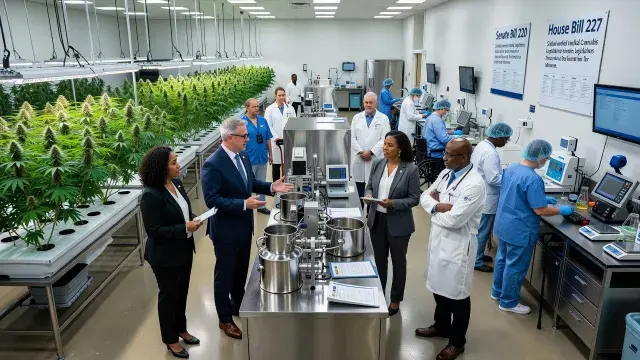
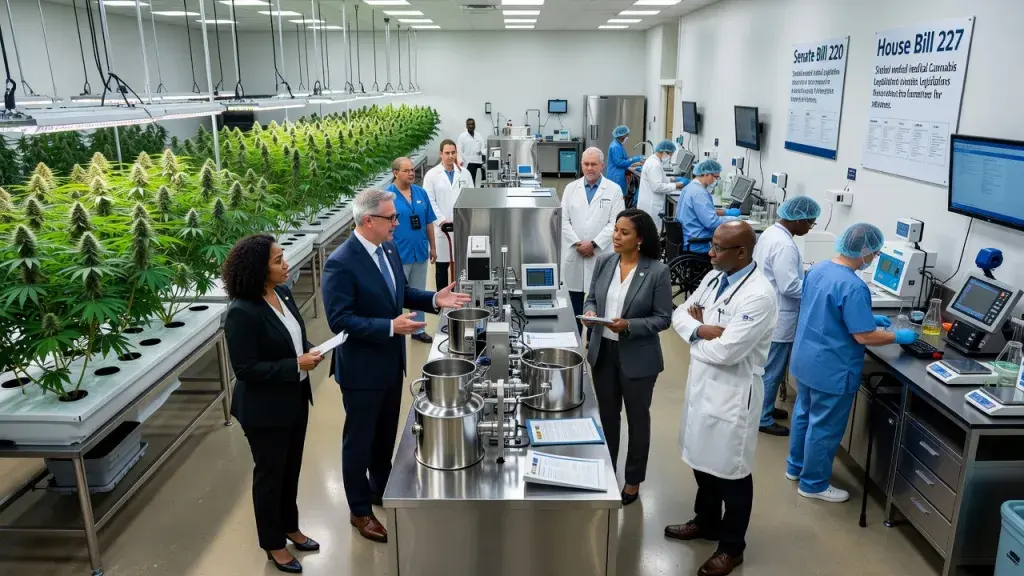
A decade after Georgia legalized low-THC medical cannabis, the program remains narrow, and lawmakers keep declining to widen it. In Macon-Bibb, one of the state's three licensed medical cannabis producers decided to make its case in person, walking legislators, physicians, and patients through its cultivation and manufacturing floor rather than waiting on another session to stall out.
Georgia Fine Fettle's market president, Judson Hill, framed the tour as an education play aimed squarely at the people who write the rules: show them seed-to-sale operations firsthand, let doctors weigh in on clinical access, and let patients speak for themselves. That kind of operational transparency matters more in a market this tightly capped. Georgia licenses only a handful of producers, and every batch moving from cultivation to dispensary shelf runs through compliance logs, lab testing, and product tracking that most consumers never see - a level of control that looks nothing like the informal supply chains critics sometimes picture. Other regulated markets have leaned on dedicated platforms to manage that same chain of custody; in Rhode Island, for instance, licensed operators use cannabis delivery software rhode island to track manifests and maintain compliance records across delivery routes, a reminder that traceability infrastructure is now a standard cost of doing business in medical cannabis, not an afterthought. cannabis delivery software rhode island
Why the Legislative Bottleneck Matters for Operators
State Representative Anissa Jones, who joined the tour, said seeing the production process firsthand changed her read on the industry - it's a controlled, repeatable manufacturing operation, not loosely grown product. That distinction sits at the center of the policy fight. Senate Bill 220 and House Bill 227 both stalled this session; had they advanced, they would have eased patient access to medical cannabis cards and updated allowable product forms. For licensed operators, stalled legislation isn't just a policy disappointment. It caps the addressable patient population, limits SKU expansion, and keeps wholesale volume flat in a market where only three companies hold cultivation and manufacturing licenses statewide.
The Product Gap Physicians Are Flagging
Dr. Elmore Alexander's concern was narrower and, in some ways, more pointed: existing product forms serve roughly 80% of patients adequately, but the remaining share - a smaller, harder-to-treat population - needs formulations the current program doesn't allow. That's a supply-chain and regulatory problem as much as a clinical one. Expanding permitted product forms would require updated manufacturing protocols, additional lab testing categories, and revised compliant packaging standards, all of which take legislative authorization before a single licensed producer can act on them.
What Comes Next
Fine Fettle's decision to open its facility to lawmakers reflects a broader pattern in tightly regulated cannabis markets: operators increasingly treat compliance transparency as advocacy currency. Whether that shifts votes in the next legislative session is an open question. But for an industry stuck relitigating the same bills year after year, showing the work may be the more persuasive argument than simply making it.