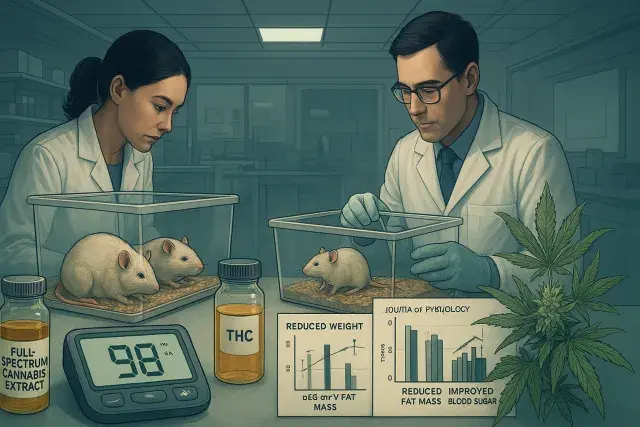
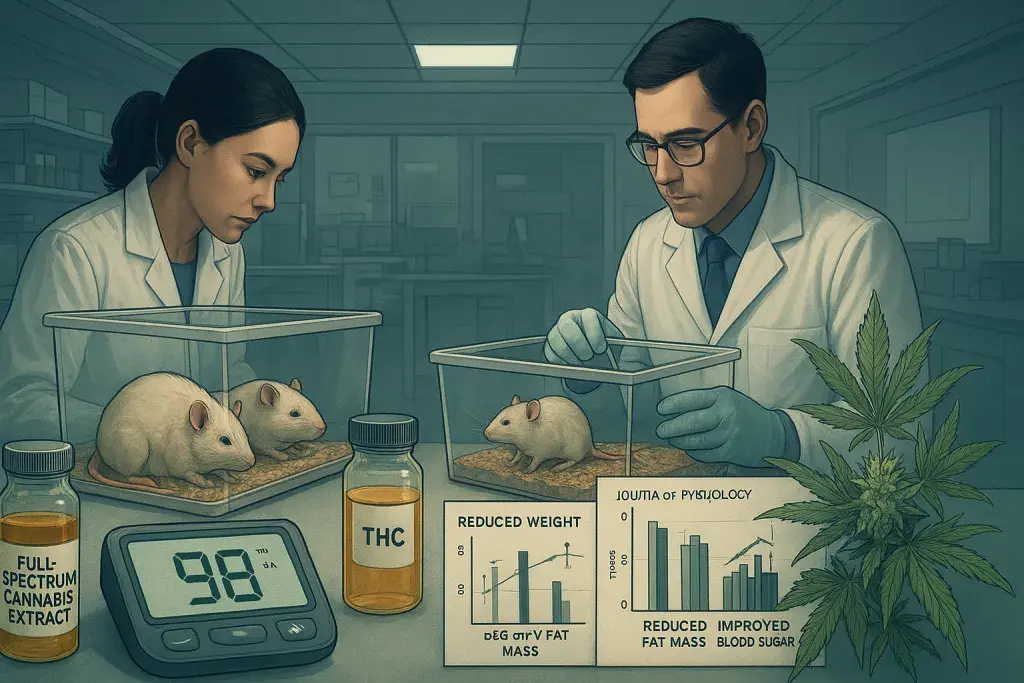
A study published in the Journal of Physiology reports that plant-derived cannabis extracts reduced body weight, visceral fat, and blood sugar levels in obese mice over a 30-day period - findings that researchers at the University of California, Riverside say point toward potential therapeutic applications in metabolic disorder management. The research assessed both isolated THC and full-spectrum cannabis extracts, and the results were not identical: only the full-spectrum extract group showed meaningful improvements in glucose clearance. THC alone reduced body weight and fat mass but did not produce the same glucose-related outcomes.
For licensed cannabis retailers and operators tracking product category trends, this kind of preclinical data matters - not as a sales claim, but as a signal of where consumer interest and product development may be heading. Full-spectrum extracts, which preserve a broader range of cannabinoids, terpenes, and other plant compounds, have already gained shelf space in regulated dispensaries as consumers move beyond single-compound products. Operators in states with maturing adult-use markets, including those relying on cannabis pos software maine to manage inventory and compliance documentation, are increasingly tracking SKU-level performance data on extracts versus isolates - a distinction that science like this may eventually sharpen further.
The UC Riverside team concluded that both THC and cannabis extract "robustly reduced body weight and visceral adiposity" in diet-induced obese mice, while noting that glucose homeostasis improvements were "particularly" associated with the cannabis extract condition, not THC alone. The authors were careful to flag that further research is needed to understand the underlying mechanisms and to translate these findings into clinical applications. That caveat matters - preclinical animal data and human outcomes do not map cleanly onto each other, and no regulatory body has approved cannabis or cannabinoid products as treatments for obesity or diabetes.
What the Science Actually Shows - and What It Does Not
The study adds to a body of population-based observational research suggesting that adults with a history of cannabis use show lower rates of certain metabolic disorders, including hypertension, obesity, and adult-onset diabetes. Observational association is not causation, and the researchers themselves stop well short of claiming a therapeutic endpoint. What the preclinical data does is sharpen the question: if full-spectrum extracts produce metabolic effects that isolated THC does not, the implication is that the so-called entourage effect - the hypothesis that whole-plant compounds interact synergistically - may have measurable physiological relevance, at least in animal models.
That's a meaningful distinction for product formulators and brands operating in the extract category. The difference between a distillate-based product and a full-spectrum extract is not just a marketing position; it may reflect genuinely different bioactive profiles. Whether that translates to human benefit remains an open question, and retailers should not be marketing products on the basis of preclinical mouse studies. Compliant product labeling, certificate of analysis documentation, and adherence to state health claim restrictions are non-negotiable - no jurisdiction allows dispensaries to advertise cannabis as a weight-loss or blood sugar management product.
B2B Implications for Operators and Brands
Here's the practical read for dispensary operators and wholesale buyers: studies like this one tend to move consumer interest before clinical evidence catches up. The extract segment - including full-spectrum oils, tinctures, and capsules - has already been growing as a product category in most adult-use markets. Buyers managing wholesale menus will likely see continued brand investment in full-spectrum positioning, and budtenders will field more consumer questions about metabolic wellness applications. Staff training on the boundaries of permissible health-related conversation - what can be discussed versus what constitutes an unlicensed medical claim - is an operational necessity, not a nicety.
Multi-state operators and compliance officers should also keep an eye on how this research filters into product marketing from brands looking to capitalize on the wellness narrative. State regulators in markets from California to Maine have shown little tolerance for health claims on cannabis product packaging or in-store advertising. An extract brand that oversteps those lines creates downstream compliance exposure for every retail licensee carrying its products. Reviewing vendor COAs and marketing materials for claim compliance is exactly the kind of due diligence that protects a dispensary license.
The Research Gap Still Has to Be Closed
To put it plainly: one preclinical study in obese mice does not establish a treatment protocol. The UC Riverside researchers acknowledged this directly, noting the need for further work to understand mechanisms and assess clinical translation. The gap between animal model data and approved therapeutic use is wide - regulatory bodies require extensive human trial evidence before any such claims can be made or products can be classified as treatments. Cannabis businesses operating in that gap, whether intentionally or through sloppy marketing, risk regulatory action.
What the study does offer, legitimately, is a direction for further inquiry - and a reminder that the pharmacology of whole-plant cannabis remains underexplored relative to its commercial footprint. For operators, investors, and product developers, that's the more useful frame: not a medical claim to advertise, but a research signal worth watching as the science continues to develop.