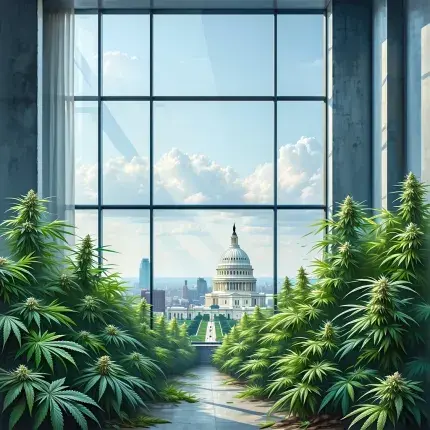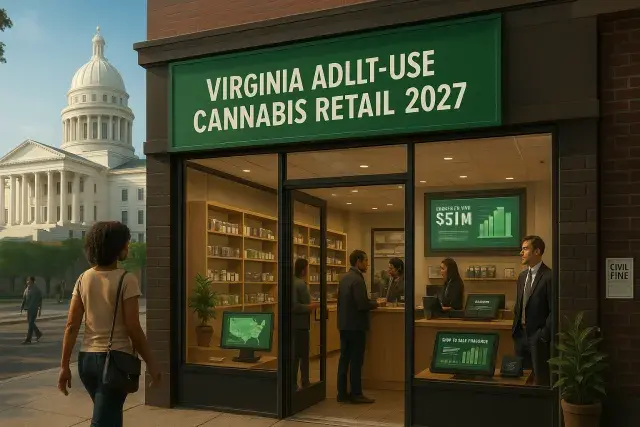
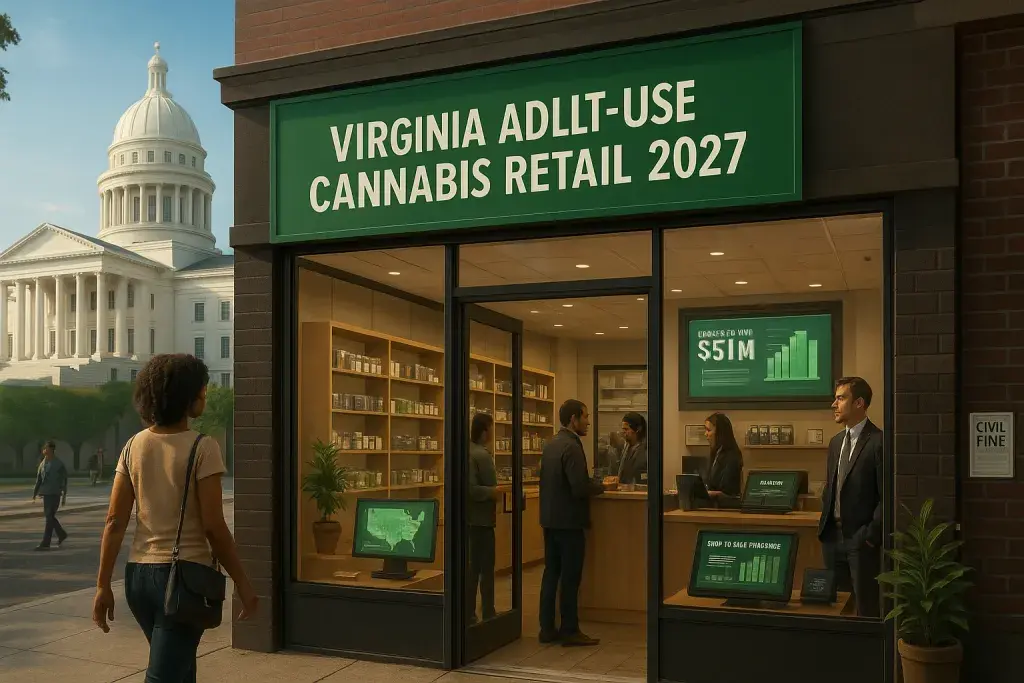
Virginia has finally closed the loop. After legalizing adult possession of cannabis in 2021 - the first Southern state to do so - the commonwealth has now enacted a legal framework for recreational retail sales, with up to 350 licensed cannabis shops authorized to open beginning July 1, 2027. The legislation, embedded in a state budget bill signed Monday, ends a years-long policy gap that left a functioning illicit market largely unchallenged and left licensed operators in a state of prolonged uncertainty.
For dispensary operators, compliance vendors, and ancillary businesses watching Virginia from the outside, the timeline matters as much as the headline. The state will begin accepting retail license applications on February 1 - well ahead of the 2027 sales date - giving regulators time to build out a seed-to-sale tracking infrastructure and giving operators time to negotiate real estate, hire compliance staff, and integrate point-of-sale systems capable of handling adult-use transactions alongside medical cannabis workflows. States that have launched adult-use programs know this runway is rarely long enough. Compliance professionals familiar with markets like Alaska, where seed-to-sale tracking through METRC shapes daily operations and operators rely on tools like a Metrc-compliant POS for Alaska to stay current with reporting requirements, understand that building a functional technology stack before day one is not optional - it is the difference between a clean launch and a cascade of compliance violations.
The law also expands the adult possession limit from one ounce to two ounces and preserves home cultivation rights. An excise tax layered on top of the existing state sales tax is projected to generate roughly $51 million in state revenue during the program's first year, according to legislative budget documents. That tax structure will directly affect wholesale pricing dynamics and retail margin planning. Operators who underestimate the combined tax burden relative to illicit-market pricing risk repeating a pattern seen in other states - where high effective tax rates on compliant products push price-sensitive consumers back toward unregulated sources rather than licensed dispensaries.
The Equity Argument Meets the Enforcement Question
Virginia's push toward legalization has been shaped, explicitly, by racial equity concerns. State data showed Black Virginians were disproportionately policed and convicted for cannabis possession - a pattern documented in many states that pursued legalization partly on those grounds. Democratic lawmakers framed the retail framework as a corrective, not just a revenue opportunity. That context is now running headlong into a provision that increases the civil fine for public consumption. Legalization advocates have objected, arguing that higher fines create a new enforcement vector that could reproduce the same disparate outcomes the broader law was meant to address. It's a tension that Virginia's regulators and law enforcement will have to manage carefully once retail sales begin.
What the License Cap Means for the Market
Three hundred fifty retail licenses for a state of roughly 8.7 million people is not a saturated market. It's a controlled one. License caps tend to concentrate early market share among better-capitalized operators - those who can afford to move fast on real estate, secure financing despite federal cannabis banking constraints, and build compliant retail operations before competitors do. Smaller, independent operators and social equity applicants often struggle to compete in that environment without targeted licensing preferences or fee deferrals built into the regulatory framework. Whether Virginia's application process includes such provisions will determine, in practical terms, who actually opens in 2027 and who gets squeezed out.
Virginia's existing medical marijuana dispensaries - already operating under the state's cannabis program - have a structural head start. They have real estate, staff, compliance logs, and seed-to-sale reporting systems already running. Converting or expanding into adult-use sales is a meaningful operational lift, but far less daunting than building from scratch. Brands and wholesalers entering the market should factor that dynamic into their distribution strategy. Early wholesale relationships will likely run through established medical operators first.
Reading Virginia Against the National Map
Virginia's move is notable not just regionally but in the context of where federal cannabis policy currently sits. The Trump administration's April announcement accelerating reclassification of state-licensed medical cannabis signals some movement at the federal level - though adult-use cannabis remains a separate and still-unresolved question under federal law. The continued federal prohibition means Virginia operators will face the same structural pressures as every other state-licensed cannabis business: limited access to traditional banking, federal tax exposure under 280E for any business that remains in Schedule I territory, and the ongoing friction of operating a cash-intensive retail environment without the payment infrastructure available to other licensed retail sectors.
The thing is, Virginia's adult-use market won't exist in isolation. It joins a national patchwork of state-regulated cannabis retail - each with its own tax structure, license framework, product testing standards, and compliance obligations. What Virginia gets right in its early regulatory design will shape whether its licensed operators can genuinely compete with the illicit market. What it gets wrong will show up in the numbers, in enforcement data, and ultimately in the policy arguments that follow. Operators and investors entering the Virginia market should treat that uncertainty not as a deterrent, but as the standard condition of regulated cannabis retail in 2025.