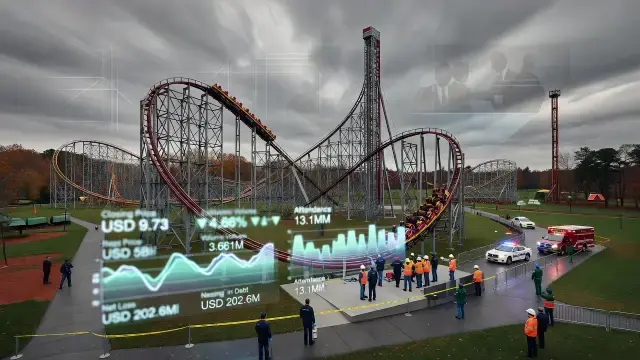
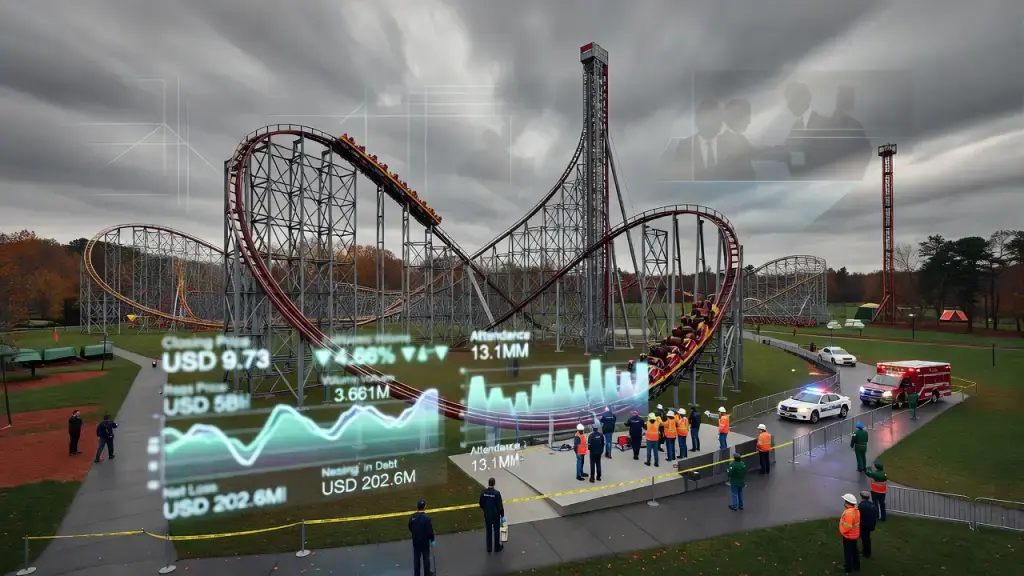
Six Flags Entertainment (NYSE:FUN) closed at USD 9.73 on October 13, 2026, down 4.66% on volume of 3.661 million shares against a 2.268 million average, a day after a fatal fall from the Goliath coaster at Six Flags Over Georgia. The sell-off reflects investor concern over safety liability, attendance risk, and a balance sheet already carrying nearly USD 5 billion in debt.
What Happened at the Park
A rider fell from the Goliath hypercoaster in Cobb County, Georgia, at roughly 3:58 p.m. on October 12. Police said one person died and several others were injured. Cobb County Major Crimes detectives are investigating, and inspectors from the Georgia insurance and safety fire commissioner's office examined the ride equipment. A company spokesperson said the park was cooperating fully with authorities. Six Flags closed Goliath and similar attractions across its other parks as a precaution - no cause has been established, and no reopening timeline has been announced.
That closure matters beyond the immediate park. Similar rides sitting idle at other locations can dent attendance and per-capita spending right as parks head into shoulder-season programming, when every visit and every concession dollar counts toward annual guidance.
A Balance Sheet Under Pressure
Second-quarter results already showed strain. Net revenues came in at USD 864.9 million, down 7% as reported though up 2.4% on a same-park basis. Adjusted EBITDA was USD 243.1 million. The company posted a net loss of USD 202.6 million, versus USD 99.6 million a year earlier, driven largely by a USD 157.4 million tax provision against a pre-tax loss of just USD 20.1 million. Net debt stood at USD 4.88 billion, with cash of USD 134.5 million and liquidity of USD 837 million, including USD 703 million drawn on the revolver.
Attendance for the quarter was 13.1 million, down 7% as reported but up 4% same-park, with per capita spending of USD 62.89. Season-to-date pass sales rose 7%. CEO John Reilly has called leverage reduction an essential priority, and activist investor JANA Partners pushed the board in March 2026 to explore a sale.
Why Safety Incidents Hit Leveraged Operators Harder
Here's the mechanism investors are pricing in: regulated attractions businesses carry fixed debt service regardless of how a season performs. When a fatal incident triggers ride closures, investigations, and potential litigation, the revenue side can soften while interest costs stay put. That mismatch is exactly what amplifies downside in a highly leveraged capital structure.
Insurance may absorb part of any liability, though the scope is unknown at this stage. Regulatory findings from Georgia's fire safety office, along with the pace of the Cobb County investigation, will shape how long the closures last and how much reputational damage follows. A single incident rarely sinks a multi-park operator outright, but it can interrupt attendance momentum right when a company most needs it - and same-park growth of 4% in the prior quarter shows there was real recovery to protect.
What Comes Next
Third-quarter results are scheduled before market open on November 5, 2026, with a conference call at 8:00 a.m. ET. That report is the next formal checkpoint on attendance trends, season pass momentum, and progress on debt reduction. Investors and the public alike will also be watching for:
- Findings from Cobb County police and Georgia's safety fire commissioner on the cause of the fall
- Any announced reopening date for Goliath and comparable rides at sister parks
- Updated attendance and per-capita spending figures tied to the closures
- Commentary from management on insurance coverage and litigation exposure
The stock's one-day drop reflects uncertainty, not a verdict. The cause of the accident has not been determined, and the company has not quantified any financial effect from the closures. Until the investigation produces findings, the market is left weighing a fixed debt load against an open-ended safety question - not a comfortable position for any operator heading into its next earnings call.