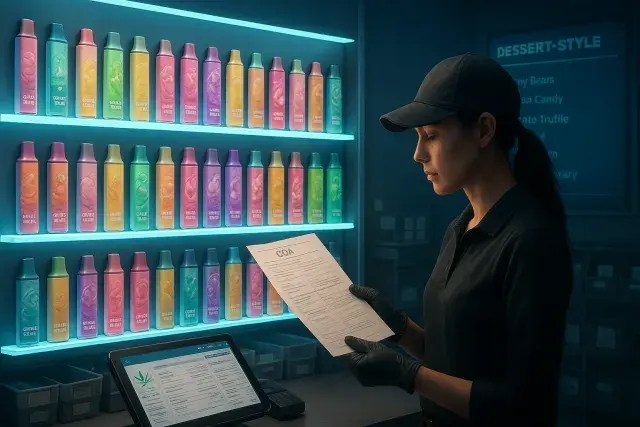

Cannabis retailers and multi-state operators are confronting a familiar problem: the software they bought to solve one headache is now creating five more. A point-of-sale system handles the register. A separate tool tracks cultivation. Another manages payroll. None of them talk to each other, and somebody on staff is stuck reconciling the gaps by hand. That's not a technology story so much as a business risk story.
One Problem At A Time Adds Up To A Mess
Here's the catch with how most cannabis businesses build their tech stack. A dispensary opens with a basic POS system. Then it adds a loyalty platform. Then a compliance reporting tool because the state auditor flagged a gap. Then an accounting package because the books don't reconcile with sales data. Each decision makes sense in isolation. Together, they create a patchwork where inventory counts in one system don't match what's reported to the state's track-and-trace platform - Metrc in most adult-use and medical markets, BioTrack in others. When those numbers diverge, it's not a clerical inconvenience. It's a compliance exposure that can trigger a license review.
Multi-location operators feel this most acutely. A product batch transferred from a cultivation site to a dispensary needs to show up consistently across cultivation records, distribution manifests, inventory counts, and point-of-sale logs. If each function runs on a different platform, someone has to manually stitch that trail together. In practice, though, manual reconciliation is where shrinkage goes unnoticed, where tax filings get delayed, and where a routine state audit turns into a multi-week scramble.
What An ERP Actually Changes
An enterprise resource planning platform built for cannabis is not a fancier POS. A POS handles the transaction at the counter - the register, the basic inventory count, the loyalty discount. A cannabis-specific ERP connects that transaction to everything upstream and downstream: cultivation batches, manufacturing runs, wholesale distribution, delivery routing, e-commerce orders, accounting entries, and the compliance filings tied to seed-to-sale tracking.
The operational logic is straightforward. One connected system means one version of inventory truth, one financial ledger, one compliance record - rather than five systems each claiming to be accurate. For an operator managing retail through cultivation, or running multiple locations across state lines, that consolidation reduces the manual labor of reconciling mismatched data and lowers the odds that a reporting error becomes a regulatory finding.
- Inventory visibility across cultivation, manufacturing, and retail in a single record
- Compliance reporting aligned with state track-and-trace systems rather than reconstructed after the fact
- Accounting tied directly to operational data, which matters given the recordkeeping burden cannabis businesses face under federal tax rules like 280E
- Customer relationship and loyalty data connected to actual purchase and inventory history
Scale Changes The Stakes
A single-location dispensary can sometimes survive on spreadsheets and good intentions. A multi-state enterprise cannot. Different states run different track-and-trace platforms, different tax structures, different packaging and labeling rules. An operator expanding from one license to several is effectively running multiple small businesses that all need to report cleanly to different regulators, often on different timelines.
What's striking here is how often growth itself becomes the trigger for compliance trouble - not bad intent, just more complexity than the existing tools were built to handle. A connected operational platform doesn't eliminate that complexity, but it does give an operator one place to see it clearly, which is often the difference between catching a discrepancy internally and explaining it to a state auditor after the fact.
The Consumer-Protection Angle Operators Shouldn't Skip
Seed-to-sale tracking exists because regulators want a verifiable chain of custody from plant to point of sale - tied to lab testing, batch recalls if needed, and age-restricted retail access. Fragmented systems make that chain harder to prove, not easier. For dispensary owners, that's a direct business risk. For regulators and consumers, it's a question of whether the product on the shelf can actually be traced back to a tested, compliant batch. A connected operational platform supports that chain; it does not replace the underlying discipline of accurate recordkeeping, proper packaging, and consistent compliance training on the floor.