Michigan's cannabis market has a supply problem that everyone can see and a demand problem that almost nobody has been measuring correctly. Retail sales fell to roughly $3.17 billion in 2025 even as consumers bought more product than the year before, because wholesale prices kept sliding and an ounce of flower now regularly sells for under $60. Layered on top of that is a new 24 percent wholesale marijuana tax that took effect Jan. 1, squeezing margins for growers, processors and retailers already competing in one of the cheapest markets in the country.
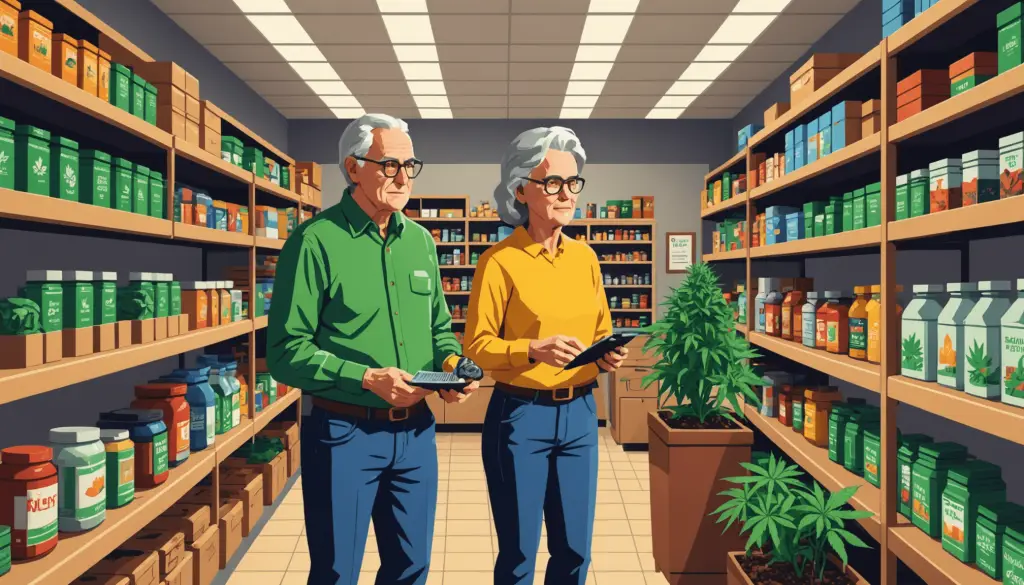
What's striking here is that the industry's fix-it conversation has mostly ignored a customer segment that may already be worth hundreds of millions of dollars a year. National purchasing data attributed to Headset puts Baby Boomers at 12.6 percent of tracked cannabis spending, behind Millennials, Generation X and Generation Z but far from negligible. Apply that share to Michigan's 2025 sales and the math points to something like $399 million in annual Boomer cannabis purchases in the state alone - an estimate, not a state-reported figure, since Michigan's Cannabis Regulatory Agency doesn't break down sales by generation. Operators trying to serve this cohort well will need retail infrastructure built for a different kind of customer relationship, including the kind of point-of-sale and inventory systems referenced by providers like marijuana point of sale software new jersey, which multi-state operators use to manage compliant transactions, loyalty data and product education across dispensary networks. marijuana point of sale software new jersey
Why the numbers may understate the opportunity
Add Ohio, and the picture gets bigger. Ohio's adult-use market generated more than $836 million in 2025, its first full calendar year of recreational sales, plus another roughly $233 million in medical marijuana sales that the recreational-only estimate leaves out entirely. Applying the same 12.6 percent share to Ohio's recreational total suggests about $105 million in annual Boomer spending there. Put both states together and you get a combined estimate near $504 million - a number that's necessarily rough, built on national averages rather than state-level generational tracking, but directionally hard to dismiss.
Separate survey work from the University of Michigan's Poll on Healthy Aging backs up the trend line. Twenty-seven percent of Michigan residents 50 and older reported using THC-containing cannabis in the previous year, compared with 21 percent nationally. Nine percent reported daily or near-daily use. Nationally, the Monitoring the Future survey found nearly 22 percent of Americans ages 55 to 65 had consumed cannabis in the prior year - the highest share the survey has ever recorded.
A different customer needs a different shelf
Here's the catch: selling more cannabis to older adults isn't the same business as selling more cannabis to twenty-somethings. The Healthy Aging poll found that among cannabis users 50 and older, 81 percent used it to relax, 68 percent for help with sleep, 64 percent because they liked the effects, and 63 percent for pain relief. Forty percent said they were attempting to address a medical condition, though cannabis retailers should be careful never to market products as treatments - that framing crosses into medical claims that most state regulators, including Michigan's, restrict tightly for adult-use license holders.
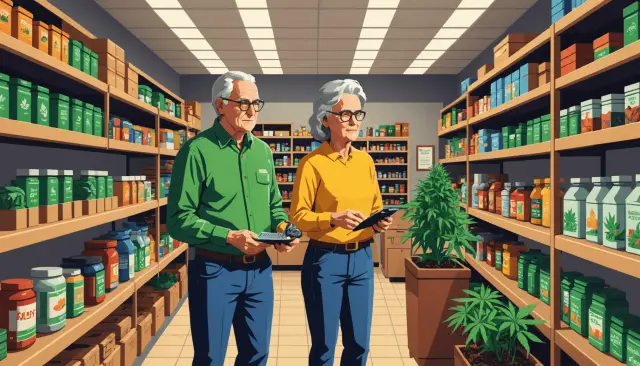
In practice, this points toward lower-dose edibles, tinctures, topicals and balanced THC-CBD formulations rather than high-potency flower or concentrates. It also points toward something dispensaries can't source from a wholesale menu: staff training. A consumer returning to cannabis after three or four decades away is looking at a product landscape - vape cartridges, live resin, beverages, nano-emulsified gummies - that didn't exist the last time they walked into a market. Budtenders and store managers who can explain dosing, onset time and drug-interaction basics in plain language may do more for repeat visits than any discount.
Consumer-safety questions retailers can't skip
None of this is risk-free growth, and operators marketing to older adults need to treat it that way. Eighty-three percent of Michigan adults 50 and older agreed that today's cannabis is stronger than what was available decades ago, according to the Healthy Aging poll - a reasonable concern given how THC concentrations in modern flower and concentrates compare with cannabis from the 1970s and 1980s. The same poll found 21 percent of older Michigan cannabis users had driven within two hours of consuming at least once in the past year, and that 36 percent of monthly users had never discussed their cannabis use with a health care provider, despite older adults being more likely to take prescription medications that could interact with THC or CBD.
- Compliant packaging and clear labeling remain essential for consumers unfamiliar with modern potency levels
- Lab-tested COAs and accurate dosing information matter more for low-tolerance or first-time-in-decades users
- Staff should avoid therapeutic or medical claims, even when customers describe medical motivations for use
- Age verification and responsible-use messaging apply the same regardless of a customer's generation
Michigan's oversupply problem isn't going away because one demographic starts buying more gummies. But the assumption that the state has already found every willing customer looks increasingly shaky. Between national consumption data, Michigan-specific survey findings and a still-developing Ohio market next door, the next meaningful wave of dispensary customers may not be the twenty-five-year-old the industry has spent a decade marketing to. It may be the sixty-five-year-old walking into a dispensary for the first time since disco was popular, unsure what to ask for and hoping someone at the counter can help.