Forty-six of the 80 cannabis businesses licensed under Kentucky's medical marijuana program have opened their doors, nearly three years after the state first legalized limited access by executive order. Gov. Andy Beshear delivered the update Wednesday at the Kentucky Cannabis Industry Alliance's fall conference in Lexington, framing the rollout as proof that a program once opposed by legislative leadership can still get built, piece by piece, under real constraints.
A Slow Build, By Design
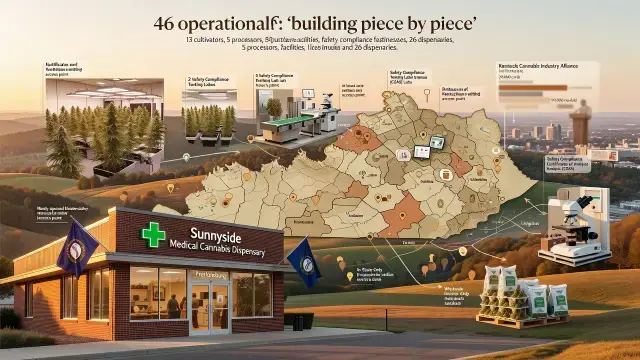
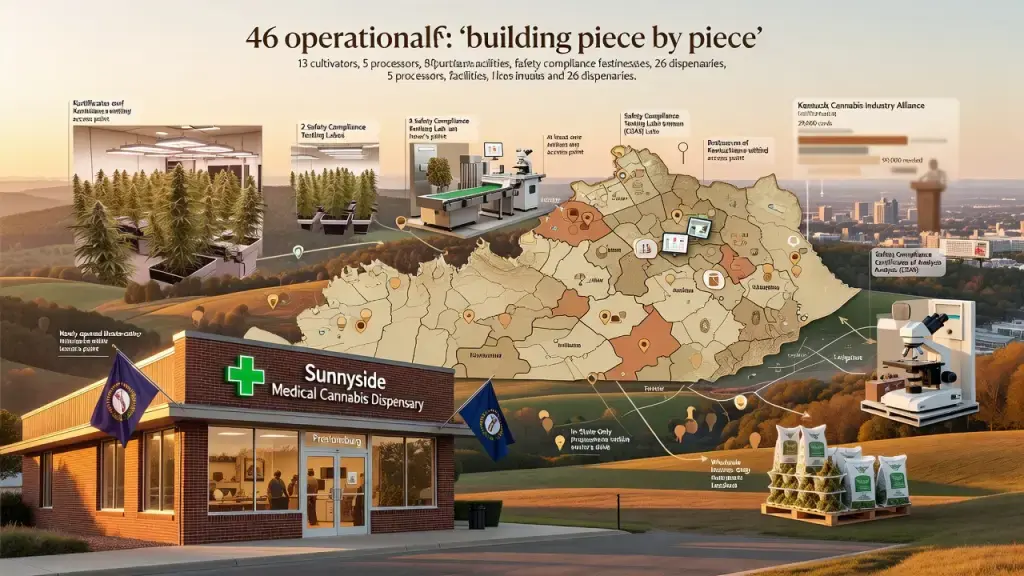
The math here matters. Thirteen cultivators, two safety compliance facilities, five processors, and 26 dispensaries are now operating - a lineup that reflects how tightly sequenced a cannabis supply chain has to be before product ever reaches a sales counter. Cultivators need time to get a crop through harvest and cure. Processors need consistent biomass flow before they can run efficient batches. Safety compliance facilities, Kentucky's version of licensed testing labs, have to be up and validating COAs before anything moves downstream. Dispensaries are the most visible piece, but they're the last domino, not the first. That sequencing explains why "half the licensees are open" counts as real progress rather than a lagging indicator.
With the recent opening of Sunnyside Medical Cannabis Dispensary in Prestonsburg, every one of the state's 11 program regions now has at least one retail point of access. KCIA Executive Director Rachel Roberts put the practical effect plainly: most Kentuckians are now within roughly an hour's drive of a dispensary. That's a meaningful operational threshold in a medical-only market where there's no delivery option and no interstate product transfer - the state ended the executive order that had allowed cardholders to bring cannabis back from other states.
Why Prices Haven't Come Down Yet
Kentucky requires all cannabis sold in-state to be grown and processed in-state. Pair that with a limited number of operating cultivators and early-stage demand that's outpaced supply, and the result is the sticker shock patients have been reporting since the first dispensaries opened. This is a familiar pattern in young medical and adult-use markets alike: wholesale pricing stays elevated until cultivation capacity and SKU variety catch up with patient counts. Roberts was direct about the fix - more dispensaries opening, and more eligible patients actually enrolling, are the two levers that bring wholesale and retail pricing down together. Neither moves in isolation.
The Access Problem Behind the Access Problem
Here's the catch with a medical-only, qualifying-condition model: even a fully built-out retail footprint doesn't guarantee a healthy patient base. As of mid-October, more than 29,000 Kentuckians hold medical cannabis cards. Roberts puts the figure needed for a genuinely healthy market closer to 90,000 - a gap that has less to do with store count and more to do with awareness and physician engagement. KCIA members are barred from advertising, which means the industry can't simply run a campaign to close that gap. Patient education has to happen through certified practitioners, word of mouth, and advocacy work, not marketing budgets.
That advertising restriction is worth sitting with, because it shapes nearly every go-to-market decision operators in this space can make. No billboards, no paid social promotion, no conventional customer acquisition playbook. Growth depends on practitioner referral networks and the slow accumulation of patient trust in a state where recreational use and smoking marijuana both remain illegal under state and federal law.
What It Means for Operators and Regulators
For license holders still working toward opening - and for investors watching Kentucky as a case study in cautious program design - the lesson is that vertical capacity and patient enrollment have to grow in tandem. A dispensary with no wholesale supply to stock its menu is just an empty storefront with a compliance logbook. A cultivator with no retail outlets nearby is sitting on a product that can't move within the state's closed-loop system. Beshear called the program "imperfect," and he's not wrong - but imperfect and functioning aren't mutually exclusive, and Kentucky's current numbers suggest a market still assembling itself one license, one region, one patient enrollment at a time.